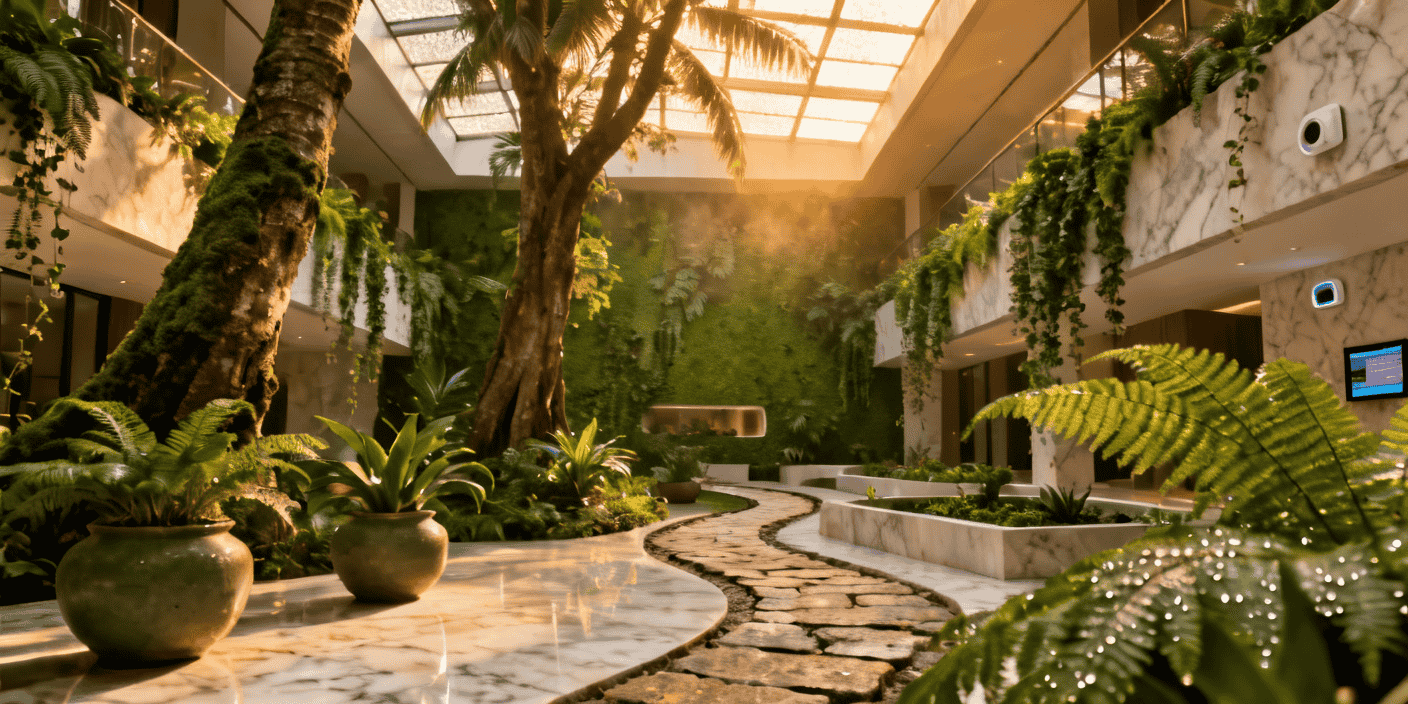
An Indoor Garden in Your Home — Why It's the Most Beautiful Addition? With Eng. Said Alriyami
"I Want a Garden Inside My Home" — The Dream Everyone Wants Now
In recent years, this has become one of the most frequent requests I receive from new homeowners: "Is it possible to have a garden inside my home?"
The answer is: yes — and it is one of the most beautiful decisions you can make in your home's design.
An indoor garden is not merely a decorative element — it is a comprehensive addition that touches the beauty of the space, the wellbeing of its residents, air quality, and the entire pattern of family life. In this article, Eng. Said Alriyami explains why the indoor garden has become one of the defining features of the modern Gulf home.
First: A Natural Escape — Inside Your Own Walls
No Need to Go Out — Nature Comes to You
In the intense Gulf summer heat, going out to public parks and gardens becomes genuinely exhausting for much of the year. An indoor garden resolves this beautifully:
You have your own private natural sanctuary — inside your home, sheltered from the heat, dust, and noise of outside.
You can enjoy your breakfast or dinner in your indoor garden — eating in the open air without leaving your home. This is a level of genuine daily luxury that no piece of furniture or décor element can replicate.
Second: A Safe, Natural Space for Children
Children Need Nature — An Indoor Garden Provides It Safely
Children thrive when they interact with natural elements — soil, plants, water, and fresh air. An indoor garden gives them:
- A safe play space without the risks of open streets or public areas
- A rich sensory experience that develops their awareness and relationship with nature
- Healthy engagement away from screens and electronic devices
- Natural learning about plant growth cycles and the responsibility of caring for living things
An indoor garden makes the home a living environment — not merely walls and ceilings.
Third: Air Purification and Improved Quality of Life
Plants — Priceless Natural Filters
Green plants inside the home continuously absorb carbon dioxide and release oxygen, measurably improving indoor air quality.
Scientifically, indoor plants help to:
- Reduce CO2 levels in enclosed indoor air
- Absorb certain chemical compounds emitted by furniture and paint
- Raise natural humidity levels in dry interior air
- Lower stress and anxiety — studies consistently show that the presence of plants calms the nervous system and elevates mood
Your indoor garden is not just decoration — it is a living health system inside your home.
Fourth: Architectural Beauty That Raises Property Value
The Indoor Garden — The Visual Heart of the Home
Architecturally, an indoor garden (whether a courtyard, atrium, or open internal garden) gives the home:
- A visual focal point — a central anchor around which other spaces are organised
- Deep natural light that penetrates the interior through the open void
- Natural ventilation that improves airflow throughout the home
- Higher property value — an internal garden is among the features that most consistently increase a home's market price
Fifth: Types of Indoor Gardens — Which Suits You?
1. The Open Courtyard
An open void at the heart of the home with a sky-facing ceiling. The most historically prevalent form in Gulf and Arab architecture. Delivers ideal natural light and ventilation.
2. Glass Roof Garden
The same courtyard concept but with a glass roof that protects from rain and dust while maintaining natural light. Best suited to the Gulf climate where wind and dust are seasonal factors.
3. Indoor Green Wall (Vertical Garden)
A full wall covered in living plants — a perfect solution for smaller spaces that cannot accommodate a traditional garden. Delivers the same visual and environmental impact in a fraction of the area.
4. Corner Garden
A dedicated corner in the living room, entrance, or corridor with a curated grouping of plants and small trees with appropriate lighting. The simplest to implement and the most budget-friendly.
Sixth: Engineering Tips for a Successful Indoor Garden
Plan it early: The indoor garden must be determined during the architectural design phase — it cannot be properly added after construction is complete. Its location affects the structural system, drainage, and lighting planning.
Design a proper drainage system: An open courtyard requires a robust drainage system that prevents rainwater and irrigation water from accumulating or infiltrating the covered portions of the home.
Choose the right plants: Not all plants thrive indoors — select varieties that tolerate partial shade, indoor humidity, and your climate's temperature range. Small palms, ficus, bamboo, and tropical species are excellent choices.
Supplementary lighting: For gardens with limited natural light, add specialised LED grow lights to compensate for reduced sunlight and ensure healthy plant growth year-round.
Water features: A small fountain or water basin within the garden adds the calming sound of flowing water, raises ambient humidity, and elevates the sensory experience of the entire space.
The Indoor Garden in Gulf and Arab Culture
The indoor garden or courtyard is not an imported concept — it is an authentic architectural inheritance deeply rooted in Arab and Islamic architecture. The "hawsh" or internal courtyard has been for centuries the heart of the Arab home — the place of family gathering, rest, and connection with nature.
The renewed interest in indoor gardens today is in reality a wise return to our architectural roots — expressed through a contemporary design language and modern materials.
Summary: Benefits of an Indoor Garden
| Benefit | Impact |
|---|---|
| Natural sanctuary | Daily psychological comfort at home |
| Safe children's space | Healthy, natural developmental environment |
| Air purification | Better air quality and improved health |
| Architectural beauty | A visual identity unlike any other |
| Light and ventilation | Natural thermal and visual comfort |
| Property value | Increased market value of the home |
| Family gathering space | A setting for meaningful daily moments |
"A home with an indoor garden is not just a place to live — it is a place to truly live."
About Eng. Said Alriyami
Eng. Said bin Hamad Alriyami is an Omani entrepreneur and construction leader whose career began in the oil and gas fields of the Rub' al Khali desert. In 2004, he founded Afdal International Construction, which has delivered more than 3,000 projects across construction, luxury finishing, and interior design. Eng. Said believes that a true home is one that brings its residents to life — not merely shelters them.
Bring Nature Into Your Home
Want to incorporate an indoor garden into your next home design? Contact Eng. Said Alriyami and his specialist team for a design consultation that turns your indoor garden vision into a beautiful, liveable reality.
📧 Email: Sriyami1978@gmail.com 📞 Phone: +96897070034
🔗 Follow and connect: Facebook | Twitter / X | Instagram | TikTok | YouTube | LinkedIn | Telegram | Snapchat